First Time Skiing in Verbier? 10 Things You Need to Know
Planning your first ski holiday in Verbier? Whether you’re a complete beginner, an intermediate skier looking to explore more of the mountain or an experienced skier keen to discover the famous off-piste terrain, a little local knowledge can make a huge difference to your trip.
Verbier is one of Switzerland’s most exciting ski resorts, with access to the enormous 4 Vallées ski area, spectacular mountain views, excellent restaurants and a lively après-ski scene. But with so much terrain to explore, knowing where to start can be a challenge.
From choosing the right lifts and meeting your ski instructor to planning your first day, finding the best lunch spots and exploring beyond Verbier, here are 10 things you need to know before hitting the slopes.

Understand How Big the Verbier Ski Area Is
One of the first things to understand about Verbier is that the skiing extends well beyond the main resort. There are several distinct areas, each offering something different.
The wider Verbier 4 Vallées ski area has 410 km of pistes, reaching an altitude of 3,330 metres at the summit of Mont Fort. You could spend a week here and still have plenty left to explore.
The Verbier side
The main Verbier sector offers a huge variety of terrain, from beginner-friendly slopes to challenging red and black pistes, itinerary routes and extensive off-piste opportunities.
The Médran lift station is a convenient starting point for accessing the main mountain. From there, you can head towards Les Ruinettes, La Chaux, Attelas and other sectors, depending on your ability and the lifts operating that day.
For your first morning, La Chaux or Lac des Vaux can be excellent areas to explore, particularly if you want to warm up on some beautiful pistes before venturing further afield.
The Savoleyres side
Savoleyres offers a different experience, with wide, cruisy pistes that are particularly enjoyable for beginners, intermediates and families. It can also be a great place to find quieter slopes during busy holiday weeks.
We recommend setting aside a day or two to explore Savoleyres if you are staying in Verbier for a week. It is a lovely area for relaxed skiing and building confidence.
The Bruson sector
Bruson is another area worth discovering, particularly when visibility is poor elsewhere. Its tree-lined terrain can make skiing more enjoyable on cloudy days, and the snow can sometimes remain in excellent condition after fresh snowfall.
Allow at least half a day to explore Bruson, although you could easily spend a full day there. Remember to factor in the time needed to travel between the sectors and check the lift connections before setting off.
Exploring the wider 4 Vallées
If you are staying for more than a couple of days, it is well worth exploring beyond Verbier. The 4 Vallées connects several resorts, including Nendaz, Veysonnaz and Thyon, offering a huge variety of terrain and scenery.
For advanced skiers, a full day exploring the wider domain can be a highlight of the holiday. Choose a clear day, plan your route carefully and leave enough time to get back before the lifts close.
What’s changing for winter 2026/27?
The new Télémixte lift connection is designed to link Verbier with Savoleyres and La Tzoumaz without needing to take a bus between the sectors. The full connection is scheduled for winter 2026/27.
This will make it easier to move between the different areas and give visitors greater flexibility when planning their ski days. Check the official Télémixte website for the latest opening information.
Our tip: If you are visiting for a week, spend your first morning getting familiar with the Verbier side, dedicate a day or two to Savoleyres, choose a clear day for exploring the wider 4 Vallées and save Bruson for a day when the visibility is less favourable.
Which Lift Should You Use on Your First Day?
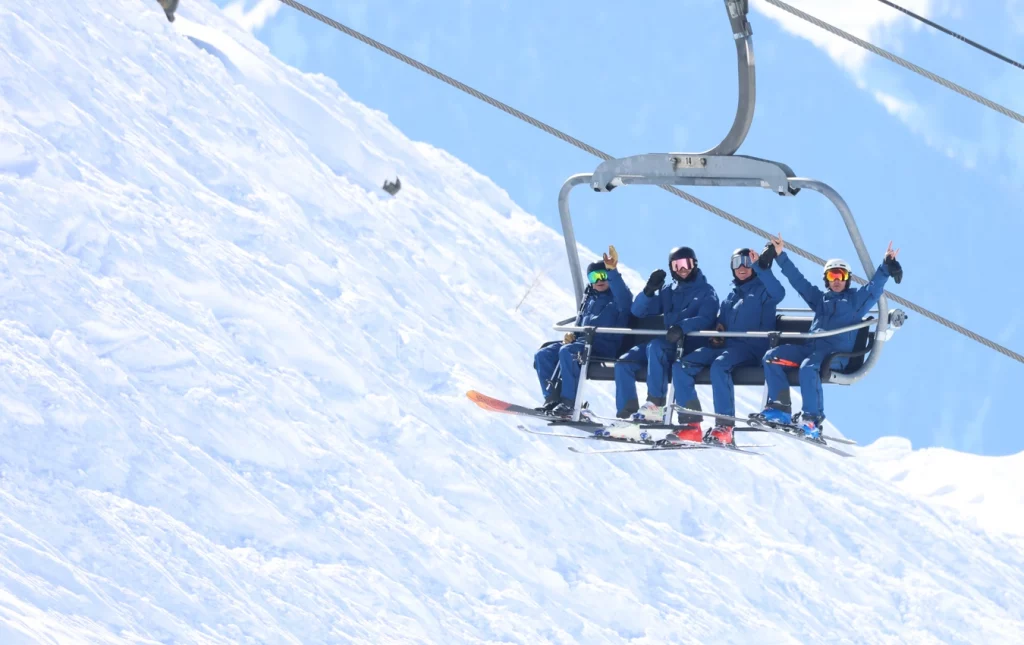
For most visitors staying in Verbier, Médran is the easiest place to start.
The Médran lift station is centrally located and accessible on foot or by the resort’s free shuttle buses. It provides convenient access to the main Verbier ski area and is a natural meeting point for ski lessons.
Even during busy holiday weeks, it can be a convenient starting point for getting onto the mountain. Queues vary, of course, so it is worth checking conditions and arriving with enough time before your lesson.
Once you are on the mountain, the best direction to head depends on your ability, the weather and what you want to achieve that day.
Beginners will need to start on appropriate nursery slopes, while confident intermediates and advanced skiers can head towards the wider range of blue, red and black pistes.
You can find current lift information, opening times and other useful details through the official Verbier 4 Vallées website.
Where Should You Meet Your Ski Instructor?
If you have booked a ski lesson, check your meeting point before the first morning.
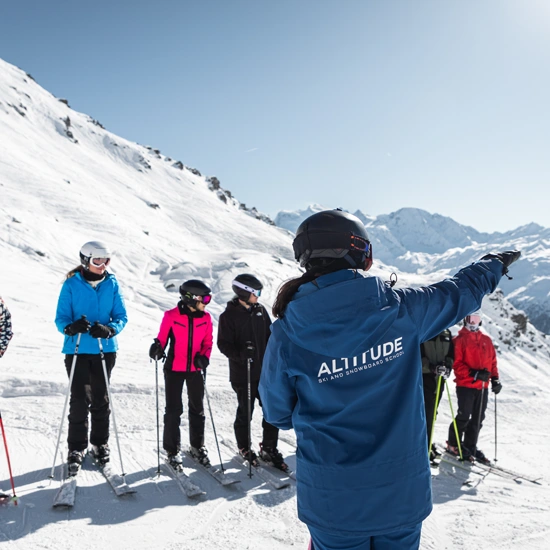
Most lessons meet at Médran lift station, making it easy to find your instructor before heading up the mountain. Depending on the arrangement, your instructor may also be able to meet you at your hotel, chalet or another agreed location.
For some lessons, particularly those focused on specific terrain or advanced skiing, it may be more convenient to arrange a meeting point higher up the mountain.
Altitude’s private ski lessons in Verbier can be tailored to your needs, and private instructors can meet you wherever is most convenient.
If you are unsure where to meet, contact the ski school in advance rather than leaving it until the morning.
Our tip: Allow plenty of time to get to your meeting point, especially if you need to collect equipment or take a shuttle bus. Starting the day relaxed makes the whole experience much more enjoyable.
What Skiing Ability Do You Need for Verbier?
One of the best things about Verbier is that there is skiing for all abilities, from complete beginners to expert skiers.
However, it is important to understand that the mountain can be demanding, and not every part of the resort is suitable for every skier.
Beginners
If you have never skied before, there are nursery slopes where you can learn the basics and gradually build confidence. As your technique improves, you can progress onto suitable blue runs.
Taking lessons is particularly useful in Verbier because choosing the right pistes can make a big difference to how quickly you progress.
Intermediate skiers
If you are comfortable on blue runs and beginning to tackle red pistes, Verbier has plenty of terrain to explore.
Savoleyres is a great option for cruisy skiing, while La Chaux and other parts of the main Verbier sector offer opportunities to progress onto more challenging runs.
Remember that piste grading does not tell the whole story. Snow conditions, steep sections and visibility can make a run feel more difficult than expected.
Advanced skiers
Confident advanced skiers will find plenty to enjoy, from challenging black pistes and moguls to itinerary routes and off-piste terrain.
The famous Mont Fort descent is a must-see for many visitors, but it is steep and often bumpy, so it is not suitable for everyone.
Mont Gelé is another area worth exploring for experienced skiers when snow and weather conditions are appropriate.
Our tip: Choose your terrain according to your ability and the conditions on the day, rather than feeling that you need to ski the most difficult runs simply because you are in Verbier.
How Does the 4 Vallées Ski Area Work?
The 4 Vallées is the wider connected ski domain that includes Verbier and several neighbouring resorts. It offers approximately 410 km of pistes, making it one of the largest ski areas in Switzerland.
From Verbier, you can explore different sectors via a network of lifts and pistes, reaching areas such as Nendaz, Veysonnaz, Siviez and Thyon.
If you are staying for a week, we strongly recommend setting aside a day to explore beyond Verbier itself.
When is the best time to explore?
Choose a day with good visibility and favourable weather, as this will make navigating the mountain easier and allow you to enjoy the views.
Before setting off, check which lifts are open, consider your group’s ability and plan your route carefully. Travelling across the 4 Vallées can take longer than expected, especially when queues or changing conditions affect your progress.
If you are an advanced skier, a full-day trip can be a fantastic way to discover new pistes, enjoy different scenery and experience more of the Swiss Alps.
Check the Weather and Lift Opening Information
Weather and visibility can have a major impact on your skiing experience in Verbier.
A sunny day might be perfect for heading to Mont Fort, enjoying the panoramic views and exploring further afield. When visibility is poor, lower slopes and tree-lined areas such as Bruson can sometimes offer a better experience.
Fresh snowfall can also change which areas offer the best skiing, while wind can affect lift operations and snow conditions.
Before heading out each morning, check the weather forecast, lift opening information and current mountain conditions.
The official Verbier 4 Vallées live information page provides information about lift and slope status, including the different sectors of the ski area. Check the winter information for the relevant season when planning your trip.
It is also worth checking the local avalanche bulletin if you intend to ski off-piste or explore itinerary routes.
Our tip: Keep your plans flexible. If the weather changes, there is almost always another way to enjoy the mountain, whether that means skiing lower down, exploring Bruson or spending more time on the sheltered pistes.
Where Should You Go for Lunch on the Mountain?
Verbier has plenty of excellent mountain restaurants, from quick stops between runs to long lunches on sunny terraces.
Here are a few of our favourites.
Le Dahu, La Chaux
Le Dahu is a firm favourite with the Altitude team. Located in the La Chaux area, it is a great place to stop for lunch or coffee while exploring this part of the mountain.
It offers a choice of self-service and seated dining, along with a terrace and beautiful views across the Val de Bagnes.
If you spend your first morning skiing around La Chaux, it is an ideal place to stop before heading back out for the afternoon.
Cabane du Mont-Fort
For a memorable mountain lunch, Cabane du Mont-Fort is well worth considering. It offers a spectacular setting high in the mountains, with incredible views across the surrounding peaks.
The area is also associated with the famous Mont Fort descent, so check the route and your ability carefully before planning to ski down.
La Marmotte, Savoleyres
If you are exploring the Savoleyres side, La Marmotte is a mountain restaurant worth considering. It is a great option to include in a day discovering this quieter side of the ski area.
La Marlenaz
For something a little different, La Marlenaz is a special mountain restaurant with panoramic views over Verbier and the surrounding peaks.
Access is different from a typical piste-side restaurant and may involve walking or organised snow transport, so check the arrangements before planning your visit.
For more ideas, read Altitude’s guide to the Best Restaurants in Verbier.
What Is Verbier Après-Ski Like?
Verbier is famous for its lively après-ski scene, with live music, bars and plenty of places to continue the fun after the lifts close.
Lumi Bar
Lumi Bar, opposite the Médran lift station, is a popular place to head after skiing. It hosts live music and is a convenient meeting point at the end of the day.
Keep an eye on the programme for performances by local and visiting bands, including The Breakaways on a Sunday at 17.30.
Farinet
Farinet is another well-known Verbier après-ski venue, with live music and a lively atmosphere. It is worth checking the current programme for performance times and events during your stay.
Après-ski schedules can change throughout the season, so check the venues’ latest announcements rather than relying on last year’s timings.
Our tip: If you want to make the most of après-ski, plan your final run so that you finish near the resort rather than having to travel a long way back at the end of the day.
How Should You Plan Your First Week of Skiing?
If you are staying in Verbier for a week, a little planning can help you experience a much wider range of the mountain without trying to do everything at once.
Here is one possible approach, depending on your ability, the weather and lift operations.
Day 1: Get to know Verbier. Start with a relaxed morning in La Chaux or the Lac des Vaux area, choosing runs that suit your ability. Stop for lunch or coffee at Le Dahu and spend the afternoon exploring nearby pistes.
Day 2: Explore more of the main Verbier sector. Once you are familiar with the mountain, venture onto some different runs. Confident skiers can consider more challenging pistes if conditions are good.
Day 3: Discover Savoleyres. Enjoy the wide, cruisy runs and take your time exploring this side of the resort. It is particularly enjoyable for families, beginners and intermediate skiers.
Day 4: Explore the 4 Vallées. If the weather is clear, plan a day discovering the wider ski area. Make sure you have enough time to return safely.
Day 5: Head to Bruson. If visibility is poor, Bruson may be an excellent option thanks to its tree-lined terrain. If conditions are good, it can still be well worth a visit for its different character and snow conditions.
Day 6: Choose your own adventure. Revisit your favourite area, work on your technique or explore more challenging pistes.
Day 7: Make the most of the conditions. Choose your final day according to the weather, snow quality and the areas you have enjoyed most.
What about Mont Fort and Mont Gelé?
For advanced skiers, Mont Fort and Mont Gelé can be highlights of the week when conditions are suitable.
Mont Fort is also worth visiting for the views, even if not everyone in the group intends to ski down. The descent itself is steep and often bumpy, so it is suitable only for skiers who are confident on challenging black terrain.
Mont Gelé is another exciting option for experienced skiers, with demanding terrain and access to itinerary routes. Check the current conditions and lift operations before heading up, and consider taking a qualified guide if you are unfamiliar with the area.
Why Skiing with a Local Instructor Can Make a Difference
Even experienced skiers can benefit from local knowledge. Verbier is a huge resort, and knowing which runs to choose, where to find the best snow and how to move efficiently between sectors can transform your holiday.
A local instructor can help you:
- Improve your technique: Develop stronger turns, better balance and more confidence on different types of terrain.
- Find the best slopes for your ability: Avoid runs that are too challenging and discover new areas as your confidence grows.
- Make the most of the conditions: Choose suitable pistes according to the weather, visibility and snow quality.
- Explore more of the mountain: Discover areas you might otherwise miss and learn how the different sectors connect.
- Challenge yourself safely: Stronger skiers can work on steep pistes, moguls and other demanding terrain, with appropriate instruction and guidance.
- Discover the best places to eat: Get local recommendations for mountain restaurants and places to stop during the day.
- Plan your week: Make better use of your time and find the right balance between exploring, improving and enjoying the mountain.
Find the right lesson for your trip
Altitude Ski School offers lessons and coaching for all abilities, from complete beginners to advanced skiers.
If you want to learn the basics, build confidence or explore the resort with an instructor, our private ski lessons in Verbier can be tailored to your needs.
For confident skiers who want to refine their technique, Private Performance Coaching offers opportunities to work on carving, bumps, powder and steep slopes.
If exploring off-piste terrain is your priority, you can also enquire about off-piste coaching and guiding.
With the right advice and a little planning, you can make the most of your time in Verbier, discover new favourite runs and enjoy everything this incredible mountain has to offer.
We look forward to welcoming you to the slopes!