Zermatt is one of those ski resorts that can be difficult to appreciate fully in just a few days.
The Matterhorn is the obvious attraction, but there is much more to skiing in Zermatt than skiing towards one of the world’s most recognisable mountains. The Matterhorn Ski Paradise stretches from the village up towards almost 4,000 metres, crosses the Swiss-Italian border and offers everything from wide, forgiving pistes to steep terrain, glaciers, challenging off-piste and some genuinely spectacular mountain restaurants.
The international Matterhorn Ski Paradise currently offers around 360 km of pistes across Switzerland and Italy, with around 200 km on the Swiss side and a further 160 km in Cervinia and Valtournenche. The highest point of the ski area is Gobba di Rollin at 3,899 metres.
But knowing how to ski the area is another matter.
Zermatt is big. Weather can change quickly, some lifts and connections take longer than they look on the piste map, and the best skiing of the day is not always where you might expect it to be.
That’s where local knowledge makes a difference.
The Zermatt ski area: where should you ski?
The Swiss side of the ski area is generally divided into three main sectors:
- Sunnegga-Rothorn
- Gornergrat
- Schwarzsee–Matterhorn Glacier Paradise
They each have a very different character, and choosing the right area for the weather and your ability can make a huge difference to your day.
Sunnegga and Rothorn
For many skiers, Sunnegga-Rothorn is one of the best all-round areas in Zermatt.
It has excellent intermediate skiing, some challenging terrain for stronger skiers and some of the most impressive views of the Matterhorn.
The area also catches the sun well, making it particularly attractive on a cold, clear morning.
For confident intermediates, the pistes around Rothorn offer some fantastic long runs. The Kumme area is particularly good when conditions are right, while the runs back towards Sunnegga provide some of the classic Zermatt skiing experience.
There is also excellent skiing around Findeln, which brings us to another important part of a day in Zermatt: lunch.
Some of the best mountain restaurants are found around the Sunnegga and Findeln sector, including well-known restaurants such as Chez Vrony, Findlerhof and Paradies.
This is one of the reasons we often recommend not simply chasing kilometres when skiing in Zermatt. A great day here can be as much about where you ski and where you stop for lunch as it is about how many runs you complete.
Gornergrat
Gornergrat offers something quite different.
The area is particularly attractive for families and less confident skiers, with plenty of wide pistes where you can concentrate on improving your technique rather than worrying about difficult terrain.
The views are spectacular, with the Monte Rosa massif dominating the skyline.
You can also reach Gornergrat by train, making it a great option for families or mixed groups where not everyone wants to spend the entire day skiing.
For stronger skiers, the area can still be worthwhile, particularly when you know which runs are skiing well and how to link it with the rest of the mountain.
Schwarzsee and the Matterhorn Glacier Paradise
This is the high-mountain side of Zermatt and the area most closely associated with the Matterhorn itself.
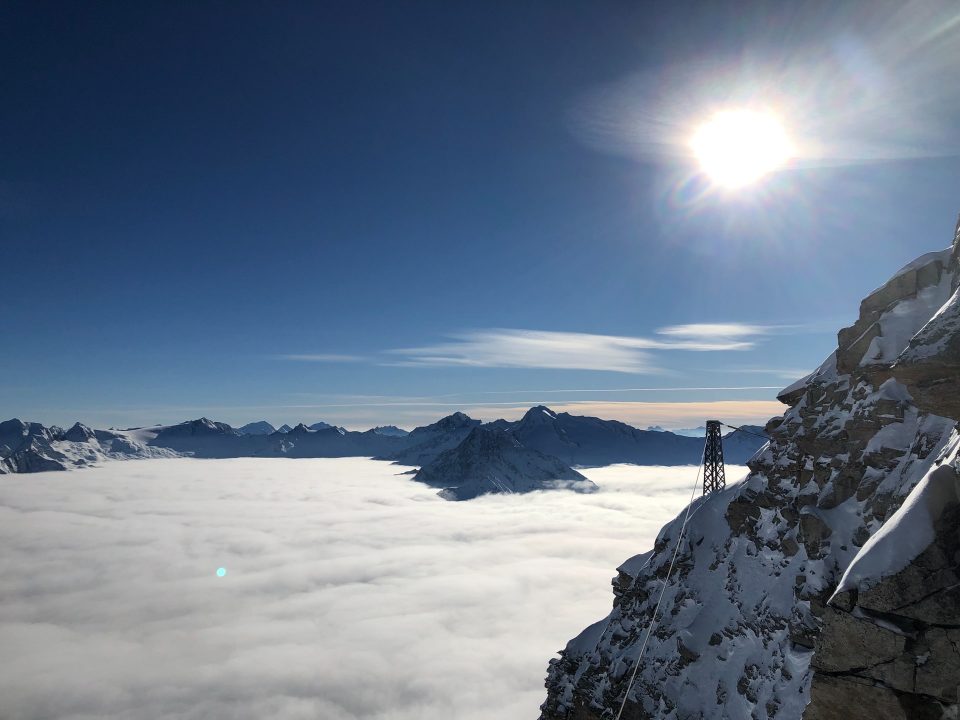
The Matterhorn Glacier Paradise reaches 3,883 metres and is home to Europe’s highest mountain station. From here, you are surrounded by an extraordinary collection of Alpine peaks and glaciers.
For strong skiers, this side of the mountain is where Zermatt starts to feel truly different.
You have high-altitude pistes, glacier skiing, the runs around Trockener Steg and Theodul, and the connection across to Cervinia in Italy.
It is also an area where conditions matter enormously. Wind, visibility and temperature can completely change the experience at altitude.
Don’t simply head to the highest point because it is the highest point.
Check the weather, visibility and lift status first. The official Zermatt lift and piste information provides live information on operating lifts and slopes.
Check the live Zermatt lift and piste information
Skiing from Zermatt to Italy
One of the highlights of skiing in Zermatt is being able to ski from Switzerland into Italy.
The route takes you across the high mountain area towards Testa Grigia and then down into Breuil-Cervinia and, if you have enough time, towards Valtournenche.
The experience is fantastic, but there is an important point that visitors sometimes overlook:
Going to Italy is not simply another run. It is a full-day adventure.
You need to allow enough time to get across the area, ski in Italy and return to Zermatt before the lifts close.
You also need the correct International ski pass. The standard Zermatt ski pass provides access to up to 200 km of pistes on the Swiss side, while the International pass adds the Italian ski area, providing a total of up to 360 km.
Check current Zermatt International ski pass information
Is skiing to Italy difficult?
Not necessarily.
The actual skiing can be manageable for a confident intermediate skier, but the bigger challenge is navigation and timing.
You need to be comfortable skiing longer distances, dealing with changing snow conditions and following the correct route.
This is particularly important if the weather changes during the day.
If you are unsure, taking a local guide can make the experience much more enjoyable. Rather than spending your day looking at the piste map trying to work out which lift goes where, you can concentrate on skiing.
And there is another advantage: a local guide will know when it makes sense to go to Italy — and when it doesn’t.
What level do you need to ski in Zermatt?
Zermatt genuinely has something for most ability levels.
Beginners
Beginners have dedicated areas around Sunnegga, including Wolli’s Park, as well as suitable terrain elsewhere in the resort.
However, Zermatt is a large and sometimes intimidating ski area. A beginner shouldn’t feel that they need to explore the whole mountain immediately.
Start in the right area and build confidence gradually.
Intermediate skiers
This is arguably where Zermatt really excels.
There is a huge amount of red terrain and long, varied pistes. A confident intermediate skier can spend days exploring without feeling like they are repeating the same runs.
The challenge is deciding which runs are worth skiing and when.
Advanced skiers
Strong skiers have plenty to explore, from steep pistes and itineraries to off-piste terrain.
But this is also where local knowledge becomes particularly valuable.
The best off-piste route is rarely simply the one that looks most impressive on the map. Snow, wind, avalanche conditions, visibility and recent snowfall all matter.
Altitude offers off-piste coaching and guiding in Zermatt for experienced skiers, with sessions designed around ability and conditions.
Explore Altitude’s Zermatt off-piste guiding
When is the best time to ski in Zermatt?
Zermatt’s altitude is one of its biggest advantages.
The ski area reaches almost 4,000 metres and includes glacier terrain, helping provide a long ski season. Zermatt also offers summer skiing on the Theodul Glacier, depending on conditions and the operating area.
For a winter holiday, however, the best time depends on what you want.
Early season: High-altitude terrain can be particularly important while lower slopes are building their base.
January: Often a great choice for cold temperatures and quieter slopes, although weather can be variable.
February: Excellent skiing and a lively atmosphere, but expect busy periods around school holidays.
March: One of our favourite times for skiing in Zermatt. Longer days, more sunshine and the possibility of excellent snow higher up.
April: Often underrated. Conditions can be fantastic at altitude, although lower slopes may become more dependent on the weather and time of day.
The important thing is not simply asking “Is there snow?”
Ask where is the best snow today?
That’s one of the biggest advantages of skiing with someone who knows the mountain.
How to choose where to ski each morning
This is one of the things that is difficult to learn from a piste map.
A good Zermatt day might start on Sunnegga because the snow is cold and the visibility is excellent.
The following day, you might head towards the Matterhorn Glacier Paradise because the high-altitude terrain is skiing better.
Another day, the best option could be to stay lower and enjoy the pistes around Sunnegga and Findeln.
Weather matters.
Wind matters.
Snow matters.
And crowds matter.
A piste that is fantastic at 9:00 can be completely different by lunchtime.
That’s why many of the people who ski with us aren’t actually looking for a lesson.
They already ski well.
What they want is someone who knows Zermatt inside out.
Someone who knows which runs are worth skiing first thing in the morning, which areas are likely to be busy, where the snow is best and where to stop for lunch.
Do you need a ski guide in Zermatt?
Not necessarily.
If you are happy following the piste map and exploring independently, you can have an amazing time.
But if you only have a few days in Zermatt, a guide can help you get much more out of the mountain.
This is particularly true if:
- You are a strong skier but don’t know the resort.
- You want to ski to Italy.
- You want to explore off-piste terrain.
- You want to find the best snow after a storm.
- You want to discover some of Zermatt’s best mountain restaurants.
- You are skiing with a family or group with different abilities.
- You want to avoid spending half your day navigating lifts and pistes.
And you don’t necessarily need a traditional ski lesson.
If you simply want a local guide to Zermatt, we are very happy to help.
You can tell us what you want from the day and we can plan it around your group, the weather and the conditions. That might mean exploring the best pistes around Rothorn, skiing across to Italy, finding the best snow, stopping for a great mountain lunch or simply discovering parts of Zermatt you wouldn’t have found on your own.
At Altitude, our Zermatt team offers private lessons, performance coaching, off-piste coaching and guiding. The aim isn’t simply to take you from one lift to another — it’s to make the most of the conditions and your time in the mountains.
See Altitude Ski & Snowboard School’s Zermatt lessons and guiding
Skiing Zermatt isn’t just about skiing
One of the reasons people return to Zermatt is that there is so much to do away from the pistes.
The village is car-free, with traditional wooden buildings, excellent hotels, bars and restaurants.
And food is a major part of the Zermatt experience.
You can have a serious lunch in the mountains, ski a few more runs and finish the day with après-ski back in the village.
For non-skiers, there are also mountain excursions, restaurants and the opportunity to visit the Matterhorn Glacier Paradise.
The Matterhorn Glacier Paradise itself sits at 3,883 metres and has a viewing platform, Glacier Palace and restaurant, making it an attraction even for people who aren’t skiing.
Don’t try to ski everything
This might be the most important piece of advice we can give.
Zermatt is enormous.
Trying to ski every corner of the resort in a single day isn’t going to give you the best experience.
Instead, choose an area based on the weather and snow conditions.
Pick a few great runs.
Have a proper lunch.
Enjoy the views.
And if the conditions are good, then explore further.
The best day in Zermatt isn’t necessarily the day when you ski the most kilometres.
It’s the day when you ski the right kilometres.
Check the conditions before you leave
Zermatt’s live information is particularly useful because the mountain can change quickly.
Before heading out, check:
- Which lifts are open.
- Which pistes are open.
- Weather and wind.
- Snow conditions.
- The connection to Italy.
- The final lift times if you are skiing across the border.
The official Zermatt lift information provides live updates on the lifts, pistes and connection to Italy.
Check Zermatt’s live lift and piste information
Ski Zermatt with Altitude
Zermatt is an incredible place to ski, but the size of the area can also make it difficult to know where to go.
Our Zermatt team can help you make the most of your time on the mountain, whether you want to improve your skiing, explore off-piste terrain or simply spend a day discovering the best of Zermatt.
We offer private ski lessons, performance coaching, off-piste coaching and guiding for intermediate and advanced skiers. Our team includes experienced instructors, with English and several other languages available.
If you are already a strong skier and simply want a local guide to show you around Zermatt, we are very happy to help with that too.
You don’t necessarily need a lesson or formal coaching. Sometimes the best way to experience Zermatt is to spend a day with someone who knows the mountain well and can take you to the best snow, the nicest pistes, the right mountain restaurant for lunch and, if conditions allow, across to Italy.
Tell us what you want from your day and we can build the experience around you, the weather and the conditions.
Book a ski lesson or guiding day with Altitude in Zermatt
Zermatt is a huge ski area. You don’t need to ski all of it. You just need to know where to go.